
The Fact Checker

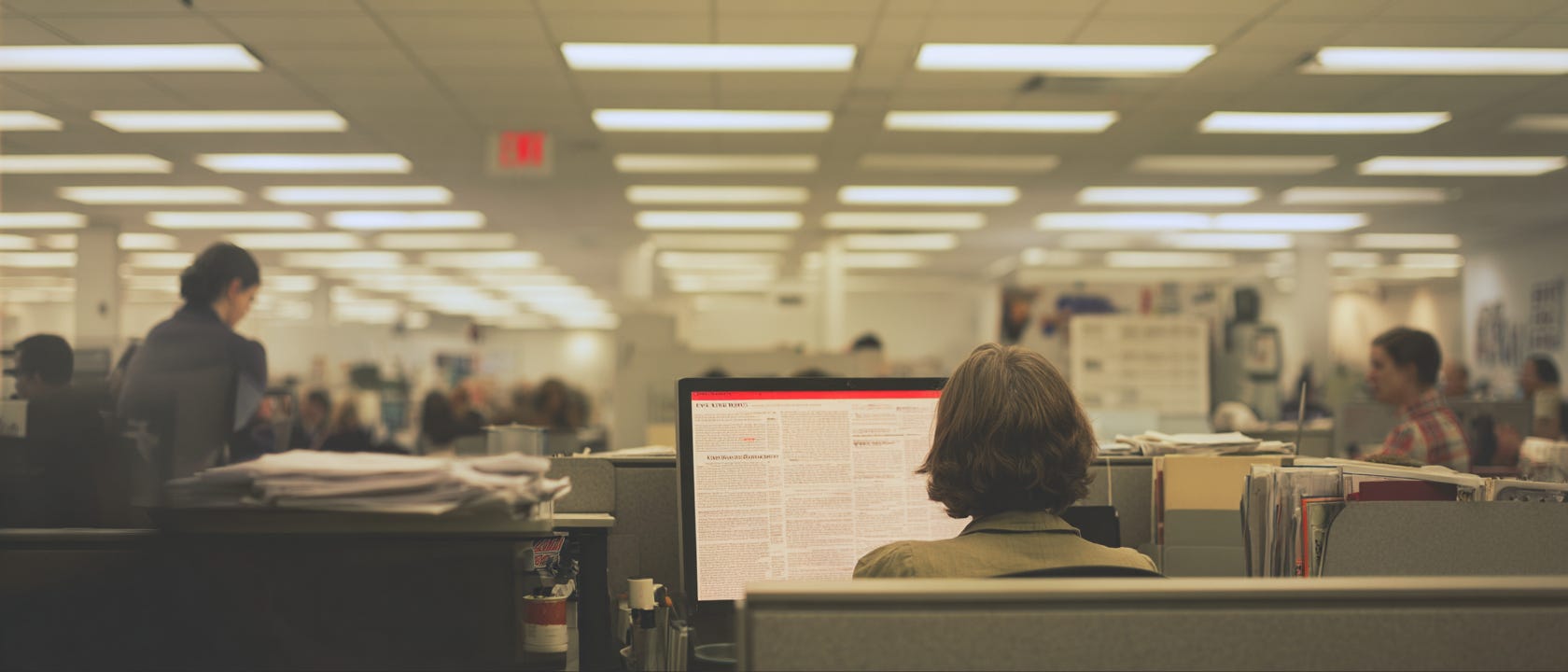
The newsroom was a thin slab of fluorescent light and coffee‑stained desks, a place where the scent of stale paper and cheap espresso clung to the air long after the morning shift had left. Maya Bengali sat in the back corner, her monitor a grid of red‑lined PDFs and hyperlinks, the cursor blinking like an impatient pulse. She was the fact‑checker, the invisible gatekeeper who turned politicians’ spin into footnotes and, sometimes, into nothing at all.
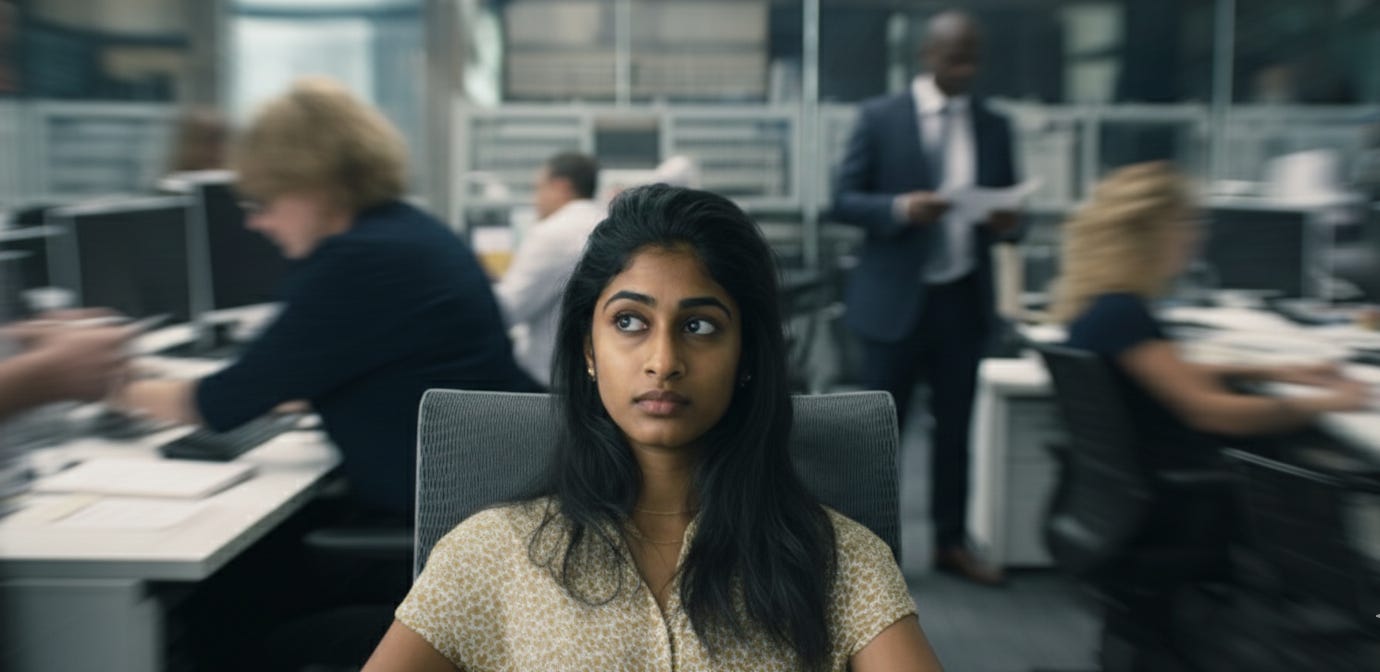
Every day she sifted through speeches, press releases, and social‑media soundbites, hunting for the smallest crack in a narrative. “The president said the unemployment rate fell to 4.2%,” a reporter would write, and Maya would dig up the Bureau of Labor Statistics, discover that the figure was a three‑month estimate, and note that the rate had actually risen to 4.3% in the most recent month. She would flag it, add a footnote, and send the revised line back to the writer, watching it disappear in a sea of other corrections. The newsroom praised her meticulousness, but paychecks never rose. The irony was a constant hum: the only thing she could guarantee was that the truth was right there, waiting, if only anyone would look for it.
At home, the truth was a different creature. Her father, Anil, lived in a modest two‑bedroom apartment on the other side of the city, his once‑orderly kitchen now a clutter of mugs, pizza boxes, and a laptop that never seemed to close. Anil had been a mechanical engineer, a man who loved equations as much as he loved his daughter’s laughter. He had retired early, his mind slipping from the predictable rhythm of gears and blueprints into the chaotic pulse of YouTube’s recommendation engine. Over months, the videos he watched grew darker, each one more conspiratorial than the last: secret societies, hidden cabals, the claim that the government used weather control to manipulate elections.
Maya’s phone buzzed at 7:00 pm with a message that read, “Maya, can you come over? I need you to watch a video with me. Just this one. I think you’ll see what I’m talking about.” The words were a thin thread pulling at something she had been trying to untangle for weeks. She stared at the screen, the glow of the newsroom’s neon still lingering on her retinas, and felt the weight of a decision that had no deadline, no deadline line to cross.
She remembered the first time Anil had shown her a clip about the “deep state.” He had been animated, his eyes bright, his words spilling out in a rapid cascade of “Did you know…?” He had tried to explain how a single senator’s name appeared in a leaked document, linking him to a clandestine group planning a “new world order.” Maya had laughed, a nervous sound that seemed too loud in the quiet apartment, and had showed him a citation from a reputable newspaper. He had brushed it off, “They’re all in on it,” he’d said, “just don’t trust the mainstream.” The conversation had ended in a sigh, the kind that settles into a room like dust.
Now, the invitation sat on her phone like a challenge.
She called him back, her voice thin, “I’ll come over. Let’s watch it together.” The relief in his voice was palpable, a crack in the wall of his isolation. Maya closed her laptop, shut down her email alerts, and stepped out into a city that seemed to breathe a low, metallic hum—traffic, sirens, the distant echo of a protest chant that had drifted over the news cycle and evaporated into a footnote.
Anil’s apartment was a small, dimly lit space, the only illumination coming from the laptop screen that cast a blue glow on his lined face. He pulled the chair up to the table, his hands shaking slightly as he pressed play.
The video began with a montage of grainy footage, political rallies, stormy skies, a map of the United States overlaid with red lines. A voice, deep and resonant, spoke in a measured cadence: “What you see on the nightly news is a narrative designed to keep you obedient. The truth is hidden in plain sight. Look at the dates, the patterns, and you will understand who is really pulling the strings.”
Maya watched the opening for a moment, feeling the familiar tug of professional curiosity. She could already see the inconsistencies: the claim that a storm in Kansas on June 12th was “engineered,” the edited footage of a senator’s speech that seemed to suggest he was saying something entirely different, the overlay of a supposed secret meeting in an abandoned warehouse that was actually a community center.
She tried to interject, “Dad, that footage is from a weather documentary. It’s not a weapon.” The words fell in her throat; her own breath heard a little too loud in the tight room. Anil turned his head, eyes narrowing. “You always tell me to ‘look at the sources,’ but the sources are the ones they want us to trust. You work for the news; you’re part of the system.”
Maya could feel the walls of the room closing in. The fact‑checker’s mind was trained to spot errors, to correct. In the newsroom, she had a ledger of facts, numbers, dates, official statements each a piece of an armor she wore against lies. In this apartment, her armor clanged against something more fragile, something that could not be mended with a footnote.
She let the video continue. The narrator introduced a timeline: “From 2015 to 2019, the same group of elites pushed policies that allowed them to control the media. In 2020, they staged a pandemic to tighten their grip.” Maya’s eyes darted to the lower right corner of the screen where a timestamp flickered: 00:03:27. The speaker referenced a study that supposedly proved the virus was engineered. She could have reached for her phone and Googled the study, could have pulled up the peer‑reviewed article that debunked the claim. She could have pointed out that the author of the study had been retracted for falsifying data, could have shown her father the actual journal’s retraction notice.
She hesitated, then, as the screen showed a grainy photo of a secret meeting, she whispered, “Dad, the photo is from a fundraiser in 2018, not a secret meeting.”
Anil’s shoulders stiffened. “You’re trying to defend them again. The system never lets you see the truth.”
A silence settled over the room, heavy as a stone.
Maya’s heart thudded. The video’s words were a mirror to her own life, a paradox of being a guardian of facts while fearing that the act of correcting could drive a wedge deeper between herself and someone she loved. She realized that every correction she had ever made in the newsroom had been a clean, clinical act, detached from the mess of human emotions. Here, in her father’s living room, the facts were tangled with fear, identity, and a desperate need for understanding.
She looked at Anil, his eyes glassy, his mouth set in a thin line. The video paused automatically at a point where the narrator was about to reveal a cryptic document. The room was dim, the only sound the low hum of the laptop’s fan and the distant wail of a siren outside.
Maya took a breath. “Dad,” she said, her voice softer than she intended, “I’m scared that they, whatever ‘they’ are, are trying to make us feel alone. Maybe it’s not about the facts right now. Maybe it’s about feeling heard.”
Anil’s stare flickered, confusion mixing with a flicker of relief. “You think they’re… using the video to keep me here?”
She nodded, “I can tell you if something’s false, but I can’t force you to believe it. I’m here. That’s what matters.”
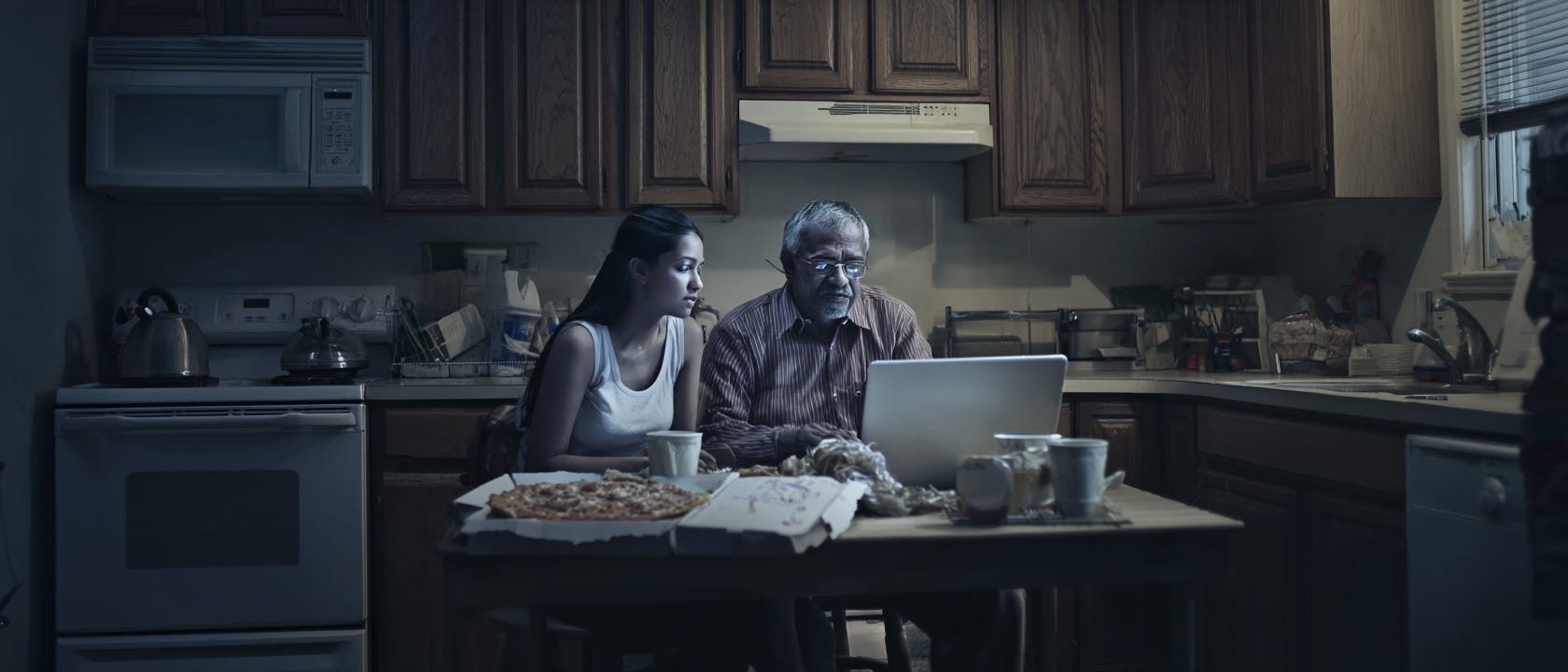
He lowered his head, the laptop’s glow catching the crease of a tear on his cheek. The video’s silence stretched. The room, once a battlefield of ideology, felt suddenly like a sanctuary. Maya’s mind raced, cataloging the lies she could dismantle, the data she could present, all while the soft rhythm of her father’s breathing filled the space.
When the video resumed, the narrator’s voice shifted to a conspiratorial whisper about a “final plan,” but Maya simply turned off the computer. The screen went black, and a hush settled over the apartment that was not the void of ignorance, but a space where they could, perhaps, talk.
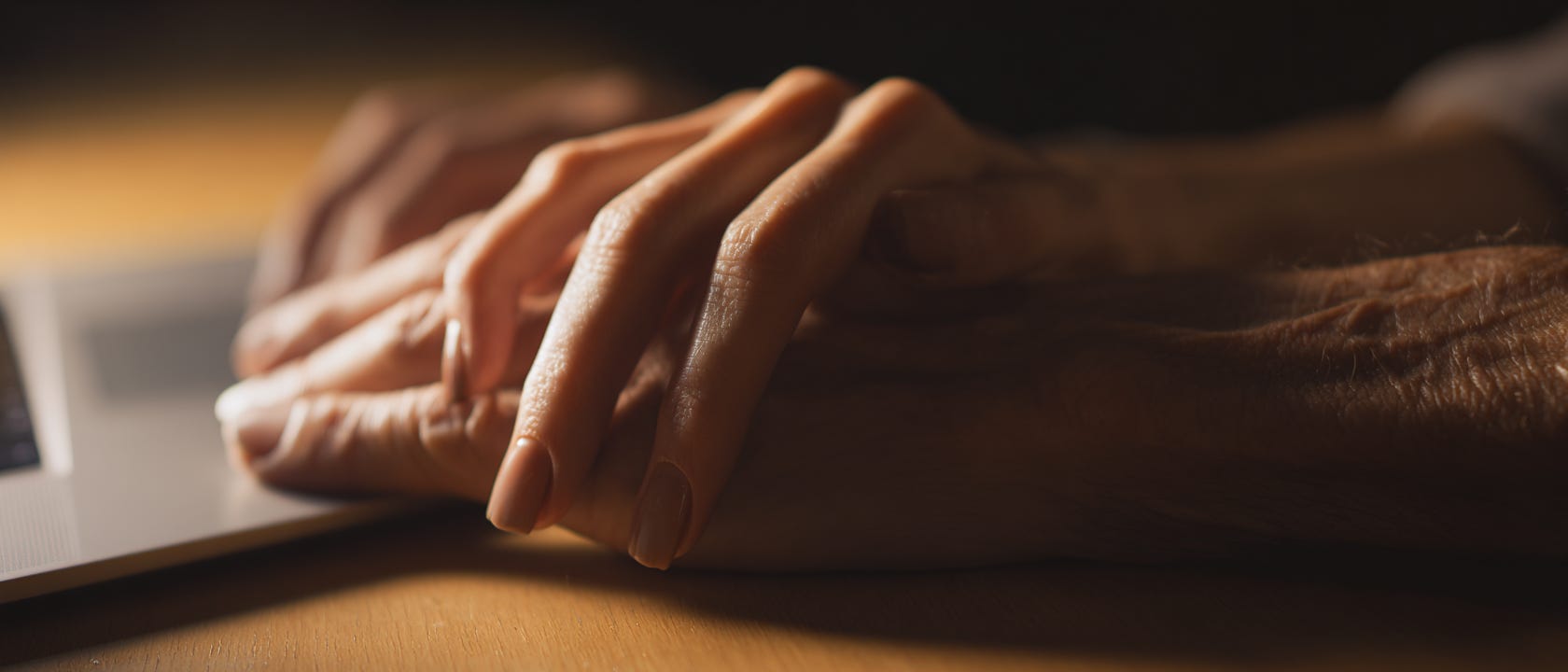
Maya pulled a chair close and placed her palm on Anil’s hand. “Tell me why you’re watching this,” she asked, her tone not scolding but gentle.
He sighed, his shoulders sagging as if a weight had been lifted. “I feel… left out. The world keeps moving, people keep talking about what’s happening and I’m… I’m scared I don’t know what’s real.” He looked at his daughter, the woman who spent her days chasing truth in a world that seemed to reward falsehoods. “I see you every day, typing, correcting, making sure the story is… accurate. I thought if I understood that, I could understand the world. But the more I watch, the more I feel… lost.”
Maya’s own life seemed to flicker in that moment; the relentless deadlines, the endless emails from editors demanding that she verify a tweet before a story could go live, the night she stayed up until the building’s lights dimmed, her fingers cramped over a keyboard, the fleeting satisfaction of a corrected line. All of that had been built on a desire to protect the public, to keep the collective conversation anchored in fact. Yet here, in this dim kitchen, the conversation she needed most was not one of bullet points but of simple presence.
She reached for a pen, a small notebook she kept for ideas, and wrote a single line on the margin: “Stay in the room.” The words were both an affirmation and a question, an acknowledgment that sometimes, the most honest thing one could do was be present, not just correct.
Later that night, back in the newsroom, the fluorescent lights hummed again. Maya opened her inbox to find a line from her editor: “We need a piece on misinformation and its impact on families. Thoughts?” She stared at the screen, at the blank document awaiting her. The story she had intended to write, cold, data‑driven, an examination of political spin suddenly seemed insufficient.
She began with a line that felt too personal: “When a young fact‑checker sits in a dim apartment with her father, watching a conspiracy video, the battle is not over what is true, but over what it means to stay together.” The keyboard clacked, each keystroke a mixture of professional precision and personal reckoning. She would still fact‑check, still cite the Bureau of Labor Statistics, still dismantle the falsehoods that littered public discourse. But she would also write about the cost of those falsehoods on the human heart, about the choice between being right and being present, about how sometimes, the best correction is the one that does not start with a footnote, but with a hand placed over a trembling one.
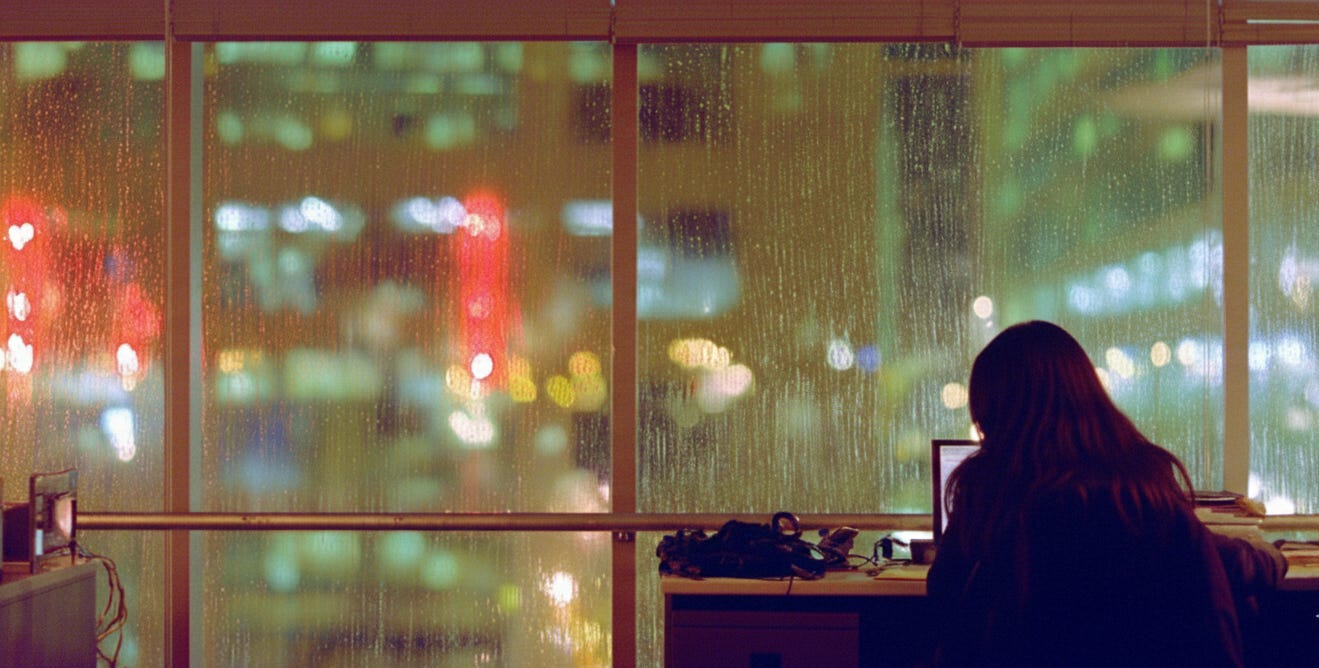
She pressed “send” and leaned back. The fluorescent lights above her flickered, and for a moment, the darkness beyond the glass windows seemed less like a void and more like an invitation to stay, to listen, to choose the room over the right. The night outside was thick with rain, the city’s streets glistening like the surface of a lake that reflected both sky and the lights beneath it. Inside, Maya’s eyes lingered on the ceiling, where the hum of the building seemed to pulse in time with her own heartbeat, a reminder that truth, like any living thing, required both a keen eye and a compassionate hand.
THANK YOU FOR READING